


SARAYA's Lactoferrin Skincare Study Wins the Tomita Award from the Japanese Association for Lactoferrin

Can a skincare ingredient change the bacteria that live on your skin? A SARAYA study on lactoferrin skincare, sebum, and the skin microbiome has won the Tomita Award from the Japanese Association for Lactoferrin (in Japanese). Kana Natsume of the Saraya Research Institute presented the work at the association's 12th Annual Meeting, held on October 24, 2026, at Mukogawa Women's University in Hyogo, Japan. The full study was published on October 20, 2026, in Applied Cosmetic Science and Technology, the English-language journal of the Society of Cosmetic Chemists of Japan.
Lactoferrin is a multifunctional protein found naturally in breast milk and tears. Most lactoferrin research has focused on taking it orally, so little is known about what happens when it is applied to the skin every day. SARAYA's study looked at two questions together: how continued use of lactoferrin skincare relates to skin condition, and how it relates to the skin microbiome, the community of bacteria that naturally lives on the skin.
How did SARAYA run the lactoferrin skincare study?
The SARAYA study followed 44 healthy women in their 30s and 40s, divided into three groups. The first group, called the lactoferrin group in the graphs below, used a lotion and gel containing lactoferrin for the full two months. The second group used the same lactoferrin products for one month, then went back to their usual skincare for the second month, to show what happens when use stops. The third group, the placebo group, used a lotion and gel without lactoferrin for two months. All participants applied the products to the whole face twice a day, morning and evening. The researchers measured skin hydration, sebum, skin surface pH, and water loss through the skin, collected a questionnaire on how participants felt about their skin, and analyzed bacteria sampled from the cheek before use and after one month.
What did the study find?
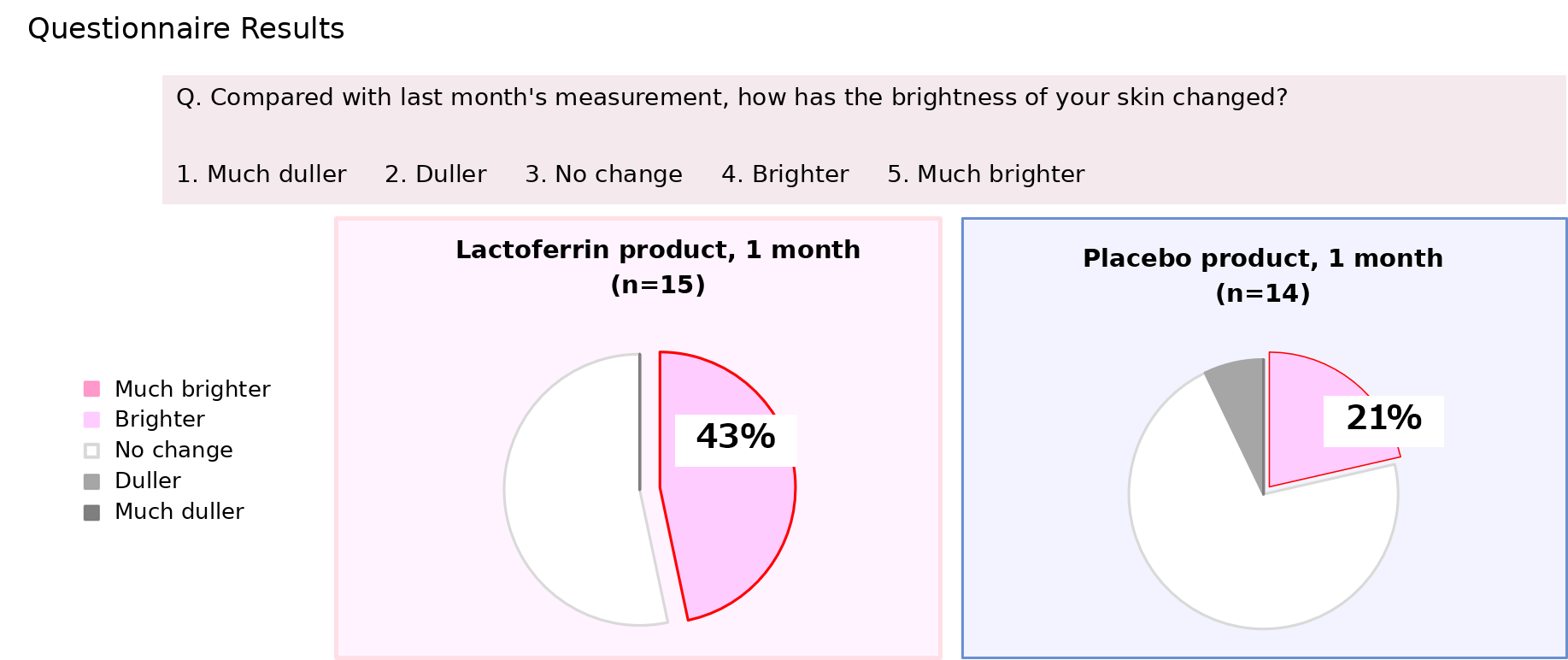
After one month, 43% of participants in the lactoferrin group said their skin looked brighter than at the previous measurement, compared with 21% in the placebo group.
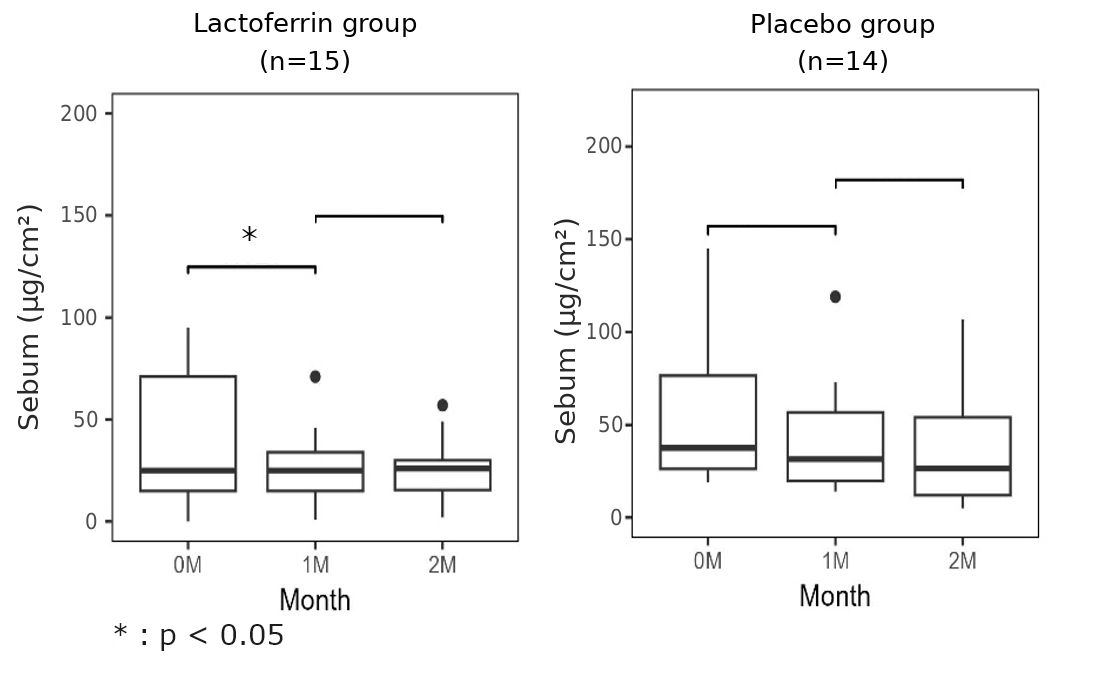
Sebum levels in the lactoferrin group fell after one month of use. In the second group, which stopped using the lactoferrin products after the first month, sebum returned to its starting level (this group is not shown in the graph), which suggests that continued care plays a role.
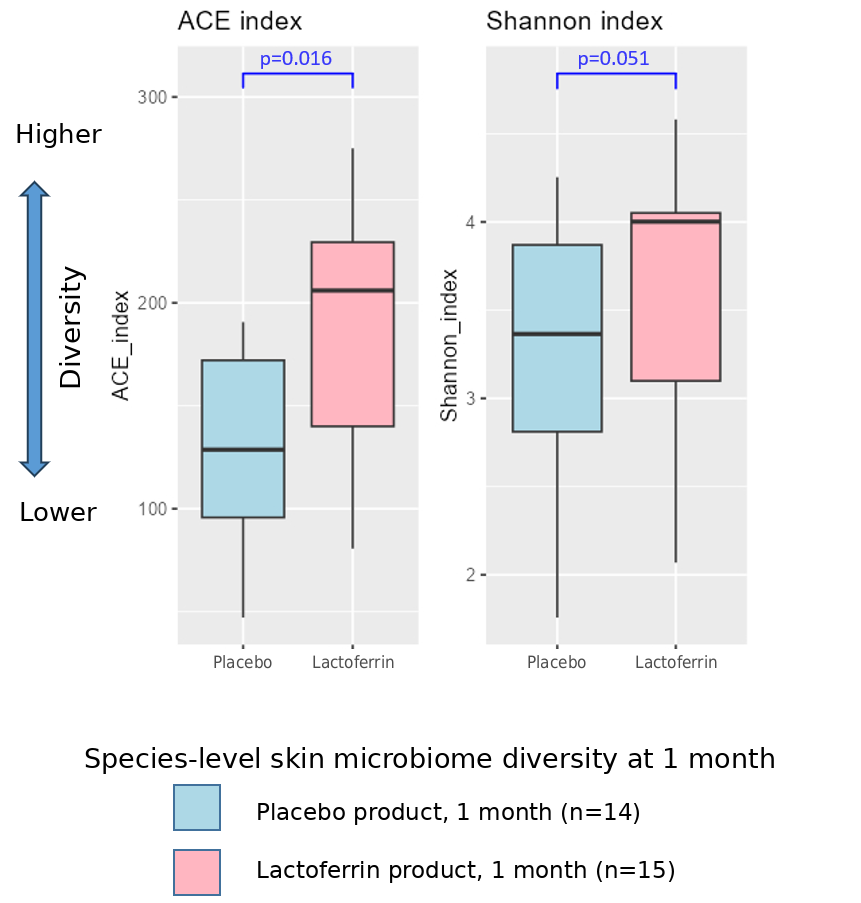
The skin microbiome also changed. After one month, bacterial diversity tended to be higher in the lactoferrin group than in the placebo group, and the overall makeup of the bacterial community differed between the two groups. Across participants, higher sebum levels went together with a higher share of Cutibacterium, a group of skin bacteria that includes Cutibacterium acnes.
The SARAYA lactoferrin skincare study was exploratory. Its results do not establish how lactoferrin works on the skin, and they do not mean the same effects will appear for every user.
Why did the study win the Tomita Award?
The Tomita Award from the Japanese Association for Lactoferrin recognizes outstanding research in applied fields. The judges noted that the SARAYA study used a clinical trial to examine both changes in the skin microbiome and improvements in skin condition from applying lactoferrin to the skin. They also pointed to its high-quality clinical data with an eye to practical use, and to how fully it carried the work from basic research toward product development.
SARAYA will keep building on its lactoferrin research as part of its commitment to sanitation, the environment and health. Read the full paper, "Effects of Daily Continued Use of Skincare Products Containing Lactoferrin on the Conditions and Microbiome of the Skin," in Applied Cosmetic Science and Technology.