


Heat Stroke Doesn't Clock Out at Sunset: What a Japan Survey Found About Nighttime Risk

Most people picture heat stroke as a daytime problem: blazing sun, a long walk, no shade in sight. In Tokyo, though, about 30% of heat stroke deaths investigated in 2019 happened overnight, between 5 p.m. and 5 a.m., long after the sun goes down.
Nighttime heat stroke develops while a person sleeps, usually in a room that stays hot and poorly ventilated overnight. The body keeps losing fluids during sleep, and without the obvious cues (bright sun, exertion, visible sweat) that daytime carries, warning signs are easy to miss until symptoms are already serious.
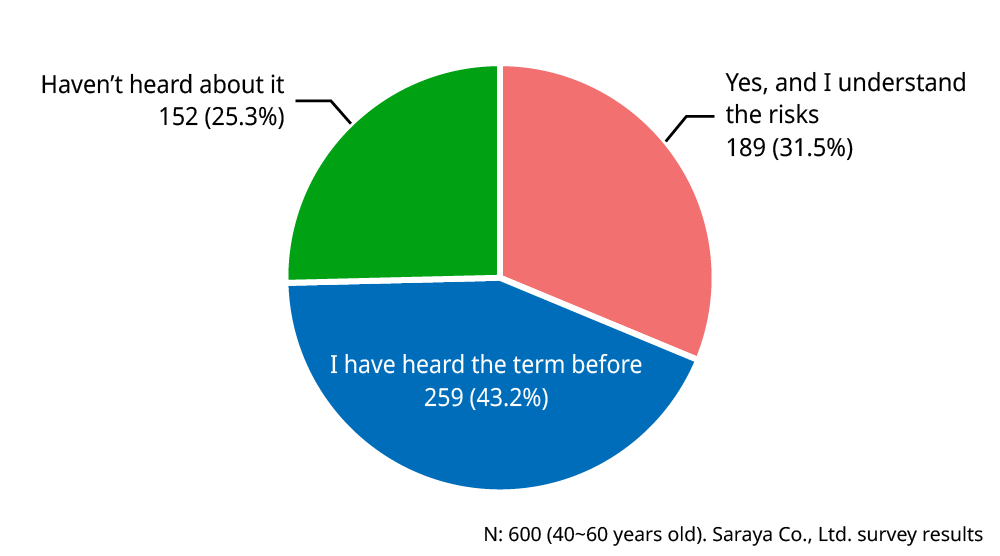
To understand awareness of this medical emergency, SARAYA surveyed 600 people in Japan, aged 40 to 60 and evenly split by gender, focusing specifically on their knowledge of heat-related illness after dark. Only about 30% correctly understood what nighttime heat stroke is.
Do you know about nighttime heat stroke?
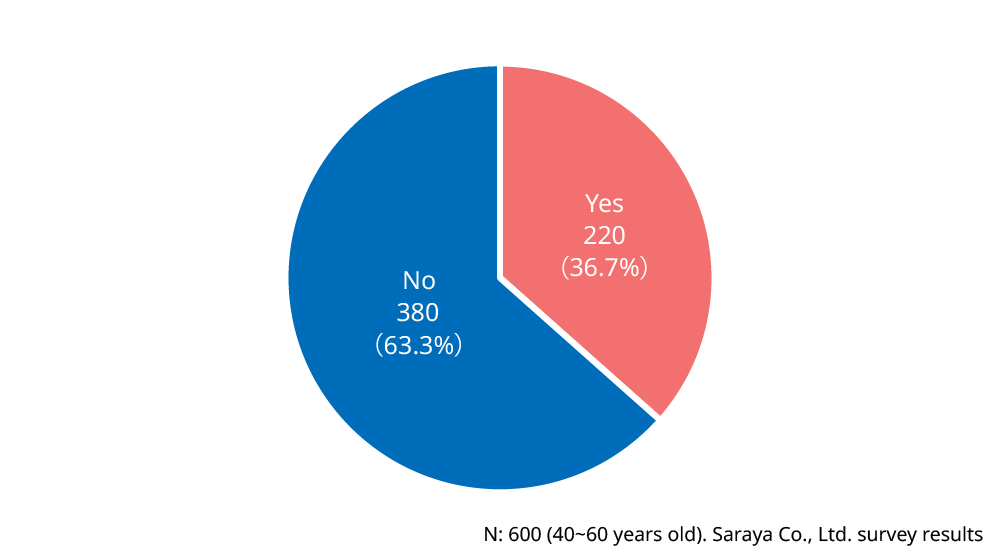
Despite that risk, over 60% said they feel no anxiety about themselves or a family member developing nighttime heat stroke.
Are you concerned that you or your family members might suffer from heat stroke at night?
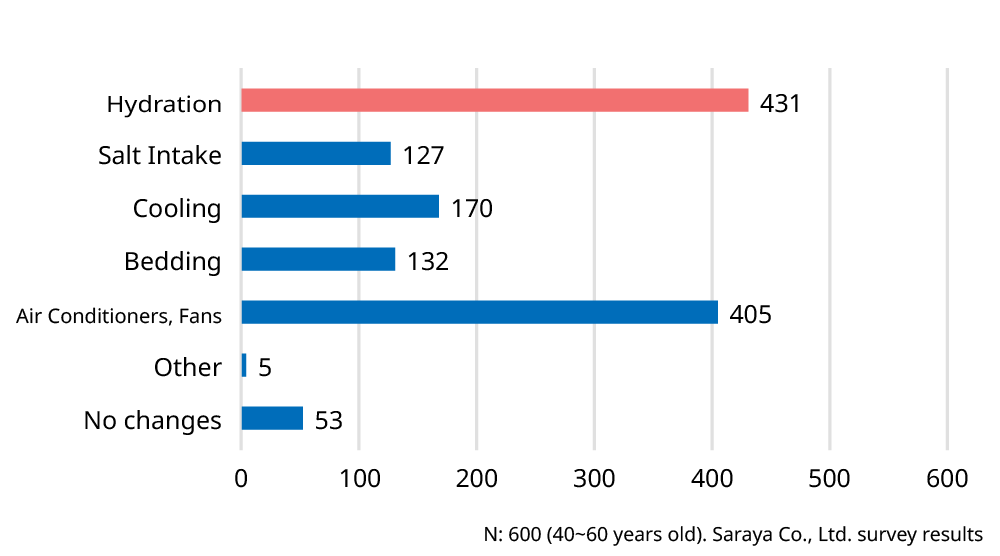
Among respondents who did understand the risk, drinking water was the preventive measure they reached for first, ahead of adjusting air conditioning, bedding, or sleepwear.
Now that you know about nighttime heat stroke, what measures do you think you'd like to take?
The Risk Beyond Japan
The underlying health risk, though, isn't limited to Tokyo, or even to Japan. Japan's own long-term nationwide data backs that up: a nationwide study from Japan's National Institute for Environmental Studies, tracking 43 years of mortality data across all 47 prefectures, found that all-cause deaths were 9% to 10% higher on hot nights (defined as a nighttime low of 25°C, or 77°F, or higher) than on cooler nights. Deaths from cardiovascular disease were 17% higher, and deaths from ischemic heart disease (a condition in which narrowed or blocked arteries cut blood flow to the heart) were 25% higher. This kind of study tracks patterns across a population; it does not show that heat directly caused any individual death. The added pattern appeared almost immediately after a hot night and continued for about two weeks.
The pattern shows up outside Japan too. A 2024 study in the European Heart Journal examined 15 years of stroke cases (2006 to 2020) at a hospital in Augsburg, Germany. In the more recent half of that period, the researchers found the most extreme nighttime heat was associated with roughly a third higher odds of stroke compared with cooler nights, a pattern they had not seen in the earlier years of the data. Older adults and women showed the strongest association.
Broader city-level data points the same way. A 2026 overview in Nature cites Hong Kong hospital records showing emergency admissions ran 3.1% higher, and 5.3% higher among vulnerable groups, during stretches of nights that stayed near 30°C (86°F) for 12 hours straight, alongside a 3% rise in deaths across several East Asian cities during intense nighttime heatwaves.
The exact numbers differ by study, region, and climate, but the direction is consistent: nights that stay hot are linked to a measurable rise in health risk in multiple countries, not only in Japan.
None of this research was conducted in relation to Nomanight Water or any other SARAYA product; it describes the general health risk of hot nights, not the effect of any particular drink.
A Drink Built for Nighttime Hydration
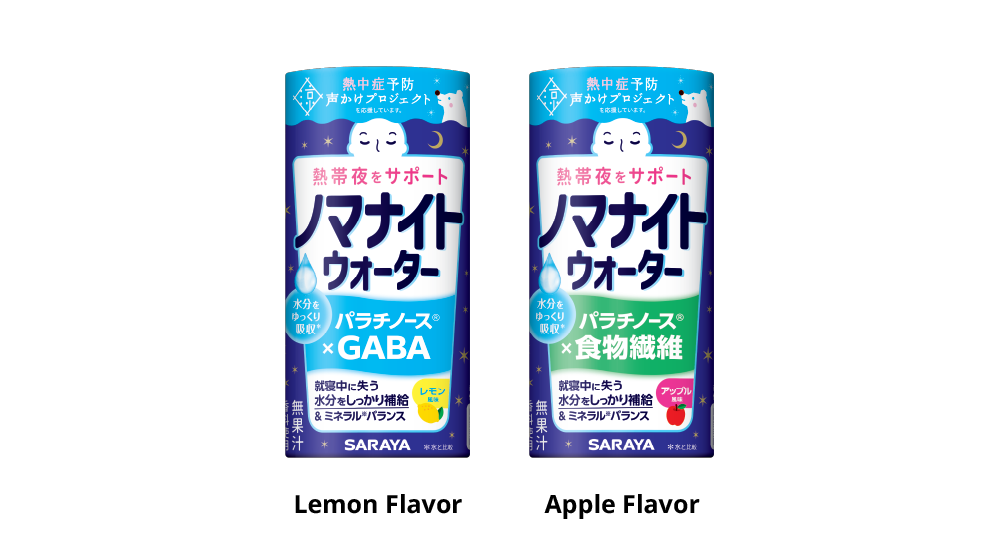
Alongside the survey, and to help increase awareness of options to fight against dehydration, SARAYA highlighted Nomanight Water Apple Flavor and Nomanight Water Lemon Flavor, a 195 mL drink formulated for hydration before sleep (availability varies by market; check your local SARAYA site or retailer). It uses palatinose, a carbohydrate that digests more slowly than the sugars in most drinks. Each bottle also contains a balanced mix of sodium, calcium, potassium, and magnesium, the electrolytes the body loses through sweat, plus two plant-based sweeteners in place of refined sugar. The bottles use eco-friendly paper packaging.
Nomanight Water is a hydration drink, not a medicine: it is not intended to diagnose, treat, cure, or prevent heat stroke or any other condition, and it has not been clinically tested against the outcomes in the research above.
Part of a Nationwide Effort
SARAYA Japan has also endorsed 熱中症予防声かけプロジェクト (Heat Stroke Prevention Calling-Out Project, when translated to English), a Japan-based public-private initiative launched in 2011. Local governments, government agencies, and private organizations across Japan run the project together, working to spread the habit of checking in on the people around you about heat stroke risk.
Whether or not nighttime heat stroke is a familiar concern where you live, staying hydrated before bed is a simple habit worth keeping through the warm months.
This article is for general information only and is not medical advice; if you or someone with you shows signs of heat stroke (confusion, a very high body temperature, hot or dry skin, a rapid pulse, or loss of consciousness), seek emergency medical care right away.